Permanence and Its Opposite: Lessons From a Garden Statue
What happens when you photograph stone meant to last forever surrounded by flowers designed to fade? A meditation on time, beauty, and what we choose to preserve.
The Contradiction at the Heart of the Garden
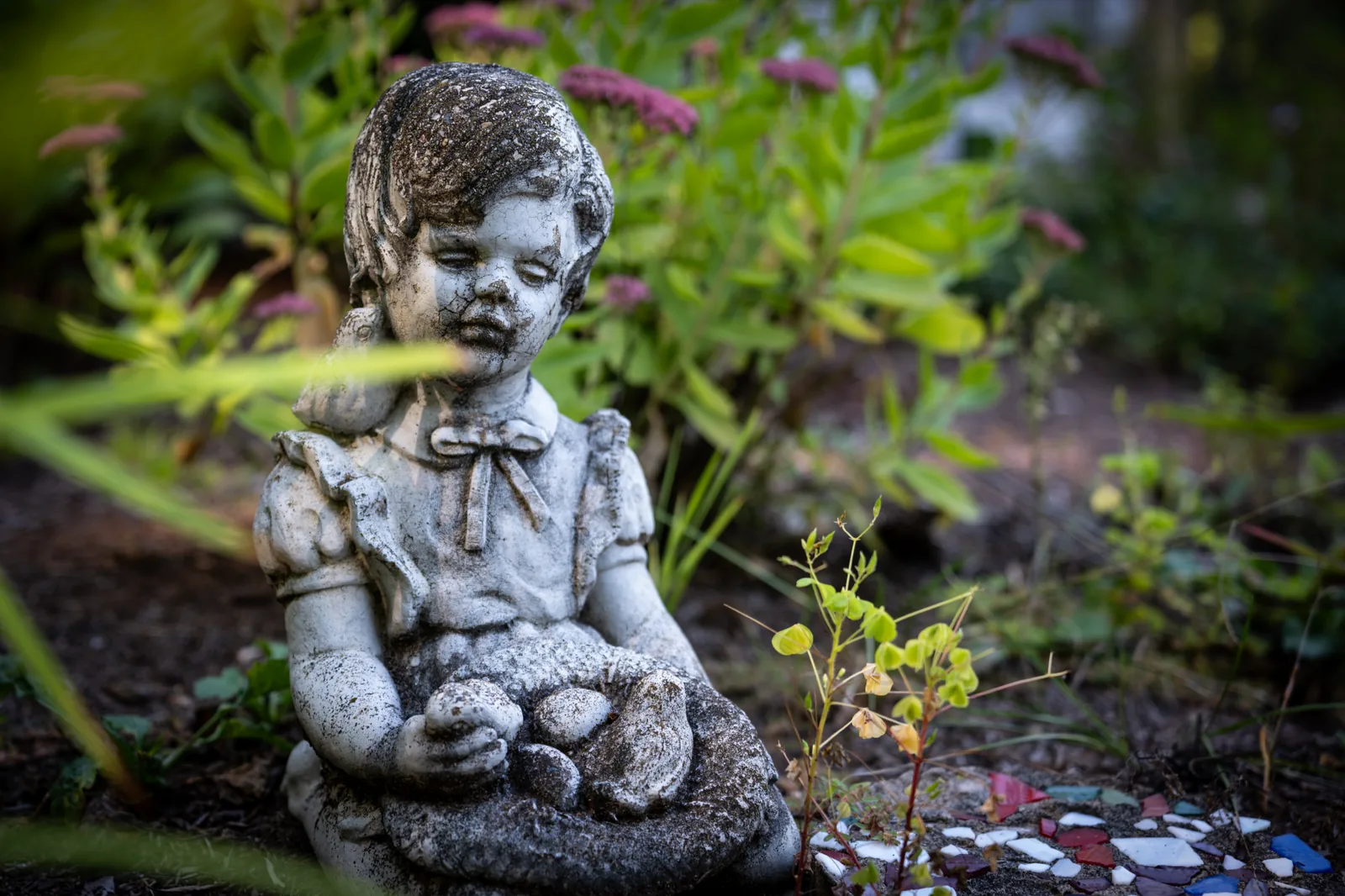
There’s a stone statue in my local botanical garden that has stood in the same spot for longer than I’ve been alive. Around it, flowers bloom and fade in cycles measured in weeks. The juxtaposition is almost too perfect: permanence surrounded by impermanence, stone embraced by petals, the enduring and the ephemeral sharing the same frame.
This photograph captures that contradiction—and everything it teaches us about beauty, time, and what we choose to preserve.
What the Stone Represents
Humans have always tried to cheat time. We carve stone, cast bronze, pour concrete—creating objects meant to outlast our mortal span. A statue like this one isn’t just decoration; it’s a declaration of defiance against entropy, a statement that something about this moment, this form, this beauty deserves to transcend the temporary.
The statue has weathered decades of seasons. Rain has softened its edges. Moss has claimed tiny territories. The precise details the sculptor carved have gradually surrendered to time’s patient erosion. But it remains, fundamentally itself, a testament to human desire for permanence.
What the Flowers Represent
The flowers tell a completely different story. They emerged from soil weeks ago. They’ll fade in weeks to come. Their beauty isn’t despite their temporariness—it’s because of it. We treasure cherry blossoms precisely because they don’t last. We photograph autumn leaves because we know winter is coming.
The flowers in this image are at their peak, that brief window when they’re fully open but not yet declining. This moment—captured at f/4.0 with soft overcast light—is already gone. The flowers in this photograph have long since faded. But the photograph remains, another kind of permanence, preserving what stone couldn’t: the exact quality of that particular October light, those specific petals at that unrepeatable moment.
The Photographer’s Dilemma
Here’s the paradox at the heart of photography: we use permanent images to preserve impermanent moments. A photograph is a kind of temporal contradiction—a frozen moment that continues existing in present tense long after its subject has changed or disappeared.
When I framed this shot, I was acutely aware of this contradiction. The statue doesn’t need photography to be remembered—it’s been here longer than most people alive and will likely remain after we’re gone. But the flowers? Without this photograph, their exact arrangement, their precise colors, the way they surrounded this stone figure—that configuration existed only once and will never be repeated.
So which am I photographing? The permanent statue, or the temporary flowers?
The answer: the relationship between them. That’s what this image preserves.
The Technical Choices That Tell the Story
At 63mm and f/4.0, I created a depth of field that keeps both statue and foreground flowers sharp while letting the background flowers fall into soft bokeh. This isn’t just aesthetic—it’s narrative. The sharpness grounds us in the present (these flowers, this moment), while the soft background suggests the endless cycle of blooms that came before and will come after.
The ISO 100 was essential for capturing the subtle gradations in the statue’s weathered surface—the way decades of rain and sun have created a palette of grays that range from almost-white highlights to shadow-deep darks. At higher ISOs, these subtle tonal variations would have been lost to noise.
The 1/80s shutter speed was fast enough to freeze any gentle movement in the flowers without requiring a tripod, maintaining the spontaneous quality of the moment. This wasn’t a meticulously planned studio shot—it was a recognition of a fleeting relationship between the permanent and temporary.
What the Composition Reveals
Look at how the flowers embrace the statue. They’re not background or decoration—they’re participants in the image’s narrative. The orange blooms in the foreground create a warm threshold we cross to reach the cooler grays of the stone. The flowers behind create depth, context, a sense that the statue exists within nature rather than apart from it.
The statue’s pose—contemplative, head slightly bowed—suggests someone examining those very flowers, creating a visual loop: we look at the statue looking at the flowers we’re also looking at. It’s a compositional echo that reinforces the theme of observation, of paying attention to beauty in its temporary forms.
The Lesson in Preservation
This photograph has made me think differently about what we try to preserve and why. The statue-maker chose stone specifically because it endures. But the flowers’ beauty is inseparable from their temporariness. Neither approach is wrong—they’re complementary ways of encountering beauty across time.
Photography occupies an interesting middle ground. A photograph lasts longer than flowers but less than stone. It can be copied infinitely but degrades in each iteration. It’s more permanent than the moment but less enduring than sculpture. It’s a compromise between the immediate and the eternal.
The Developer’s Reflection
In software development, we navigate similar tensions between permanence and change. We write code meant to be maintained for years while knowing it will be refactored, updated, eventually replaced. We create databases designed for permanence but architected for change.
The best systems embrace both needs: stable interfaces (the stone statue) that persist across versions, wrapping changeable implementations (the flowers) that adapt to new requirements. Neither permanence nor flexibility is sufficient alone—we need both, just as this garden needs both stone and petals to be complete.
Why This Resonates
I think this image connects with people because we all navigate this tension. We want relationships that endure but also need space to grow and change. We value tradition but need innovation. We seek stability but crave novelty.
The statue and flowers don’t compete—they complete each other. The stone gains meaning from the flowers’ temporary beauty. The flowers gain context from the statue’s enduring presence. Together, they create something neither could achieve alone: a meditation on time itself.
The Buddhist Perspective
There’s a Buddhist concept called anicca—impermanence. It suggests that suffering comes from our attachment to permanence in a world where everything changes. We build stone statues trying to freeze moments, when perhaps wisdom lies in appreciating beauty precisely because it’s temporary.
But there’s also value in what endures. The statue provides continuity, a landmark that helps us measure change. Without anything permanent, we couldn’t perceive the temporary. We need both to understand either.
This photograph, unintentionally, captures that philosophical balance.
For Other Photographers
If you want to explore these themes in your own work:
Look for contrasts in duration. Ancient trees with spring flowers. Modern buildings with fleeting clouds. Permanent subjects with temporary light.
Consider what your depth of field communicates. Sharp permanence against soft temporariness? Everything equally fleeting? Let your technical choices reinforce your themes.
Think about time in your compositions. What has been here longest? What will fade first? Can you frame elements that represent different temporal scales?
Embrace weather and patina. The wear on this statue isn’t damage—it’s evidence of time, a visual record of persistence. Don’t shy away from showing age.
Shoot in soft light. Harsh sun creates drama, but soft overcast light reveals subtle textures and tones that harsh shadows would obscure.
What Makes This Work
Beyond the philosophical themes, this image succeeds compositionally because:
- The statue provides a visual anchor - your eye knows where to rest
- The flowers create movement - different colors and focal planes guide your eye through the frame
- The color palette is harmonious - cool grays and warm oranges are complementary
- The pose suggests contemplation - the statue seems to participate in the observation
- Multiple focal planes create depth - the image rewards extended viewing
The Irony Worth Noting
Here’s something I find amusing: I’ve written nearly 2,000 words about permanence and impermanence, preservation and change, all prompted by a photograph that I captured in about 30 seconds. The statue and flowers didn’t care about these themes—they were just being themselves, existing in proximity.
I brought the philosophy to them. That’s what observers do: we impose meaning, find patterns, construct narratives that help us make sense of what we see.
Maybe that’s the real lesson—not that beauty exists in permanence or impermanence, but that meaning exists in the attention we bring to observation, regardless of what we’re observing.
Prints Available
This photograph invites contemplation about time, change, and what endures. It works beautifully in spaces dedicated to reflection, meditation, or simply appreciating the interplay between stability and transformation that defines our experience.
Related Reading
If this meditation on time and impermanence resonated with you, explore:
- Finding Forgotten Kingdoms - Another exploration of decay, transformation, and nature’s patient reclamation
- When Nature Becomes Architecture - Discovering structural genius and design principles in natural forms
- The Accidental Still Life - More on finding meaning in the juxtaposition of contrasting elements
Prints Available
This photograph invites contemplation about time, change, and what endures. It works beautifully in spaces dedicated to reflection, meditation, or simply appreciating the interplay between stability and transformation that defines our experience.
View in Gallery | Order a Print
A Final Thought
The next time you encounter something permanent—a statue, a building, an ancient tree—look for what temporary beauty surrounds it. And the next time you encounter something fleeting—a flower, a sunset, a particular quality of light—look for what enduring elements provide context.
Neither exists in isolation. Both gain meaning from the relationship.
That relationship is what photography preserves—not things, but the connections between them. Not moments, but the meaning we find in how moments relate to what persists beyond them.
That might be the most permanent thing of all.
How do you think about permanence and change in your own work, whether photography or otherwise? I’m curious how others navigate this tension. Share your thoughts below—these conversations often last longer than we expect.