Celebrating the Common: Why Marigolds Deserve Your Attention
In a world that chases the rare and exotic, there's radical beauty in photographing the 'ordinary'—and marigolds taught me why that matters.
The Audacity of Orange
While most autumn flowers settle into tasteful burgundies and modest yellows, marigolds arrive at the party wearing the botanical equivalent of a neon sign. There’s nothing subtle about them—and that’s precisely what makes them magnificent.
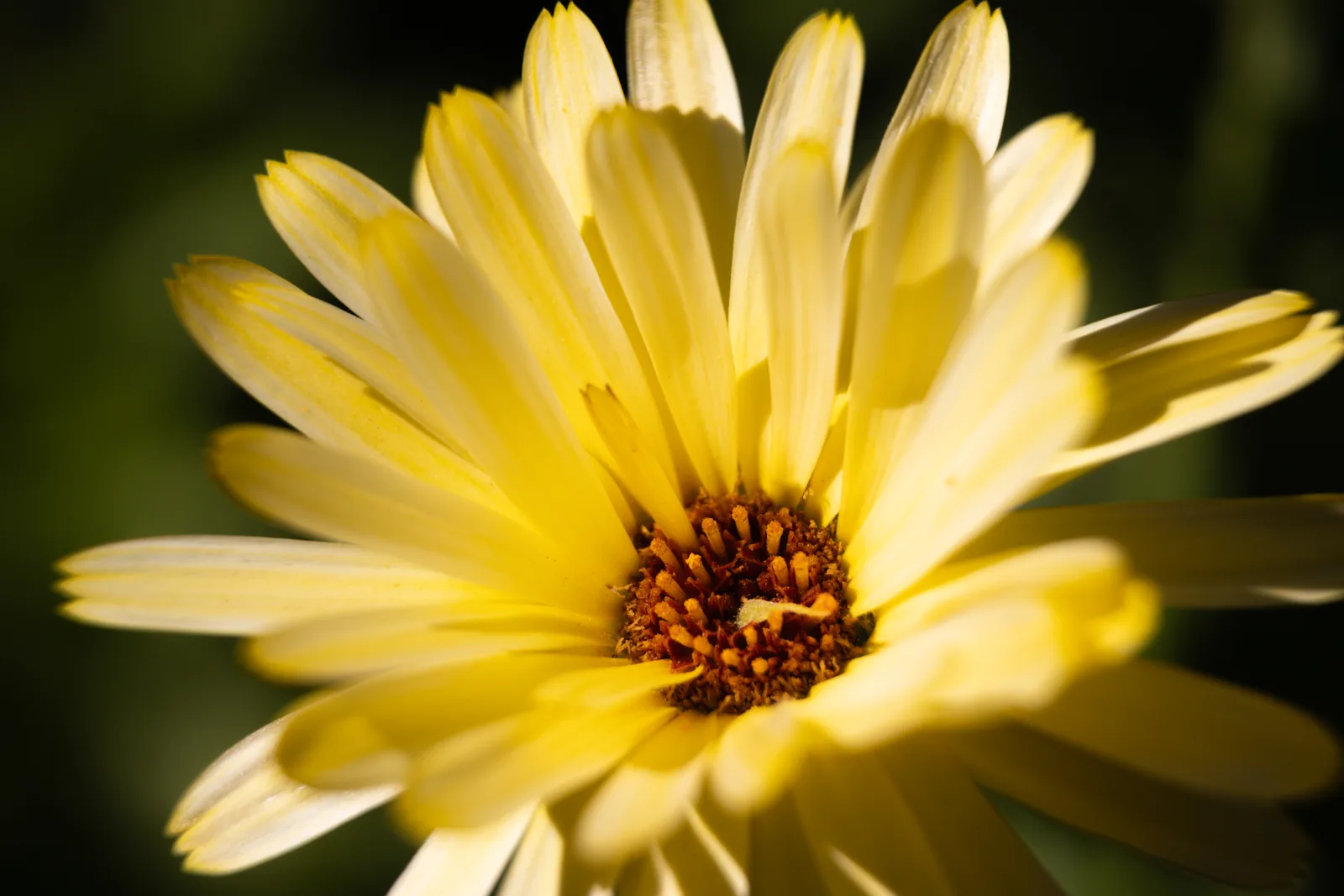
This close-up reveals what happens when you slow down and really look at a flower that most people dismiss as “common.” There’s nothing common about the intricate architecture of these petals, the way each layer unfolds with mathematical precision, the gradient of color from deep orange to almost-gold at the tips.
The Instagram Comparison Trap
Here’s an embarrassing confession: when I started photography, I avoided shooting marigolds. They felt too… basic. Too accessible. Everyone has marigolds in their garden. Where was the prestige in photographing something so ordinary?
I wanted to capture rare wildflowers, exotic blooms, the kinds of subjects that would make people say “where did you find THAT?” I was chasing the extraordinary while ignoring the extraordinary hiding right in front of me.
The Shift in Perspective
The turning point came when I was scrolling through my favorite photographer’s work and found an entire series dedicated to dandelions. Dandelions. The weeds we spend fortunes trying to eliminate from our lawns.
But in their photographs, dandelions were transcendent. The macro shots revealed architectural complexity I’d never noticed. The backlit images showed translucent seed heads like galaxies. The simple compositions elevated a “weed” into art.
If dandelions could be art, what about marigolds?
The Art of Getting Close
Macro photography teaches patience. You can’t force your way into a flower’s intimate space—you have to earn it through careful positioning, steady hands, and an understanding that at 103mm with extension tubes, every microscopic movement translates to major shifts in framing.
I shot this at f/6.3, a deliberate choice that let me thread the needle between two competing needs: enough depth of field to render multiple petal layers sharp, but shallow enough to transform the background blooms into soft washes of complementary color.
The technical challenge:
- Too wide open (say f/2.8) and the focal plane becomes impossibly thin—only the front petals are sharp
- Too stopped down (say f/16) and the background gains distracting detail that competes for attention
- f/6.3 hits the sweet spot: dimensional sharpness where it matters, dreamy bokeh where it helps
What the Background Tells Us
Look beyond the main subject and you’ll see something important: context. Those soft oranges and yellows in the background aren’t accidents or distractions—they’re the supporting cast in this autumn story. They tell you this isn’t a single bloom in isolation, but part of a larger tapestry, a whole garden of these audacious flowers declaring their presence.
The background also serves a compositional purpose: by filling the frame with similar hues at different focal planes, the image creates a sense of abundance, of being surrounded by autumn’s generosity.
The Lesson in Accessibility
Here’s what photographing marigolds taught me: accessibility doesn’t diminish value. In fact, it might enhance it.
Anyone can grow marigolds. They’re inexpensive. They’re hardy. They thrive with minimal care. This accessibility means:
-
Everyone can relate to them. Show someone a rare orchid and they appreciate its beauty abstractly. Show them a marigold and they remember their grandmother’s garden, their first attempt at planting flowers, that pot on their apartment balcony.
-
You can practice without pressure. When your subject is literally growing in abundance right outside your door, you can take your time learning macro technique without the anxiety of “I only have one chance at this rare bloom.”
-
The challenge becomes seeing, not finding. Instead of hunting for exotic subjects, you learn to see extraordinary qualities in ordinary things—a skill that translates to every area of photography and life.
The Technical Meditation
Working at this magnification requires a different mindset than standard photography. You’re not composing a scene—you’re collaborating with physics, optics, and the wind.
ISO 100 was non-negotiable for maximum color purity and detail. The overcast sky provided the soft, even light that preserved subtle tonal variations in petals that could have been blown out by harsh sun.
The 103mm focal length gave me the working distance I needed. Get too close with a shorter lens and you start casting your own shadow on the subject. The slight telephoto compression also helped by bringing those background flowers closer visually, creating that coveted “wall of color” effect.
The 1/640s shutter speed wasn’t just about freezing motion—though even a gentle breeze becomes a gale force wind at this magnification. It was about capturing this exact moment when the light caught the petal edges just right, creating that subtle rim lighting that makes the flowers appear almost luminescent.
Why “Common” Doesn’t Mean “Unworthy”
In photography, it’s easy to chase the rare, the exotic, the “Instagram-worthy.” We scroll through feeds full of impossibly beautiful locations and think our local garden can’t possibly compete.
But here’s the thing: photography isn’t a competition to find the most exotic subject. It’s an practice in learning to see what others miss, to reveal the extraordinary hiding in plain sight.
Marigolds grow in nearly everyone’s garden. They’re inexpensive, hardy, sometimes even considered pedestrian. But photograph them with intention, with genuine curiosity about their structure and color, and they become something else entirely. They become a reminder that “common” doesn’t mean “unworthy of attention.”
The Developer’s Parallel
As a developer, I see this lesson apply to code as well. We’re often tempted to use the latest, hottest framework or technology. But sometimes the “boring” solution—the well-tested, widely-understood, thoroughly-documented approach—is the right choice precisely because it’s common.
Mastery isn’t always about working with exotic tools. Sometimes it’s about understanding common tools so deeply that you can use them to create extraordinary results.
For Aspiring Macro Photographers
If you want to practice macro photography but feel intimidated:
Start with accessible subjects. Flowers in your garden or at a local park. You can return repeatedly, practice different techniques, learn from mistakes without pressure.
Study the subject first. Spend time just observing before you shoot. Notice how light moves across petals, how colors shift, where interesting details hide.
Embrace the technical challenge. Macro photography requires precise focusing, careful depth of field choices, and often slow shutter speeds. These constraints make you a better photographer.
Fill the frame with similar hues. When shooting flowers, position yourself so the background contains similar colors at different focal planes. This creates visual harmony.
Shoot in overcast conditions. Soft, even light is your friend in macro work. Save harsh sun for other subjects.
The Bigger Picture
Every time I look at this image, I’m reminded that photography—like life—isn’t about constantly chasing the next impressive thing. Sometimes the most meaningful work comes from slowing down and really seeing what’s already around us.
Marigolds taught me that lesson. And now, when I walk past any “common” flower, I pause. Because I know that with the right light, the right angle, and the willingness to see beyond labels like “ordinary” and “basic,” there’s always something extraordinary waiting to be discovered.
Related Reading
If this perspective on finding beauty in the ordinary resonated with you, explore:
- When Nature Becomes Architecture - Discover the mathematical precision and structural genius hidden in flower petals
- The Story Behind ‘The Unreal Bird’ - Another lesson in seeing the extraordinary in everyday places
- The Drama of Light and Shadow - Advanced techniques for making simple subjects cinematic
Prints Available
This photograph celebrates the audacious beauty of autumn’s boldest blooms—a reminder that the most accessible subjects can yield the most powerful images when approached with curiosity and care.
View in Gallery | Order a Print
Final Thought
The next time you dismiss something as “too common” to photograph, ask yourself: am I seeing the subject, or am I seeing the label I’ve put on it?
Because there’s nothing common about really seeing. That’s always extraordinary.
What “common” subjects have surprised you with their photographic potential? Share your discoveries below—I’m always looking for new perspectives on everyday beauty.