The Drama of Light and Shadow: Making Flowers Cinematic
How specific light, precise exposure, and intentional composition can transform a simple flower into a scene with narrative tension and visual drama.
When a Flower Becomes a Scene
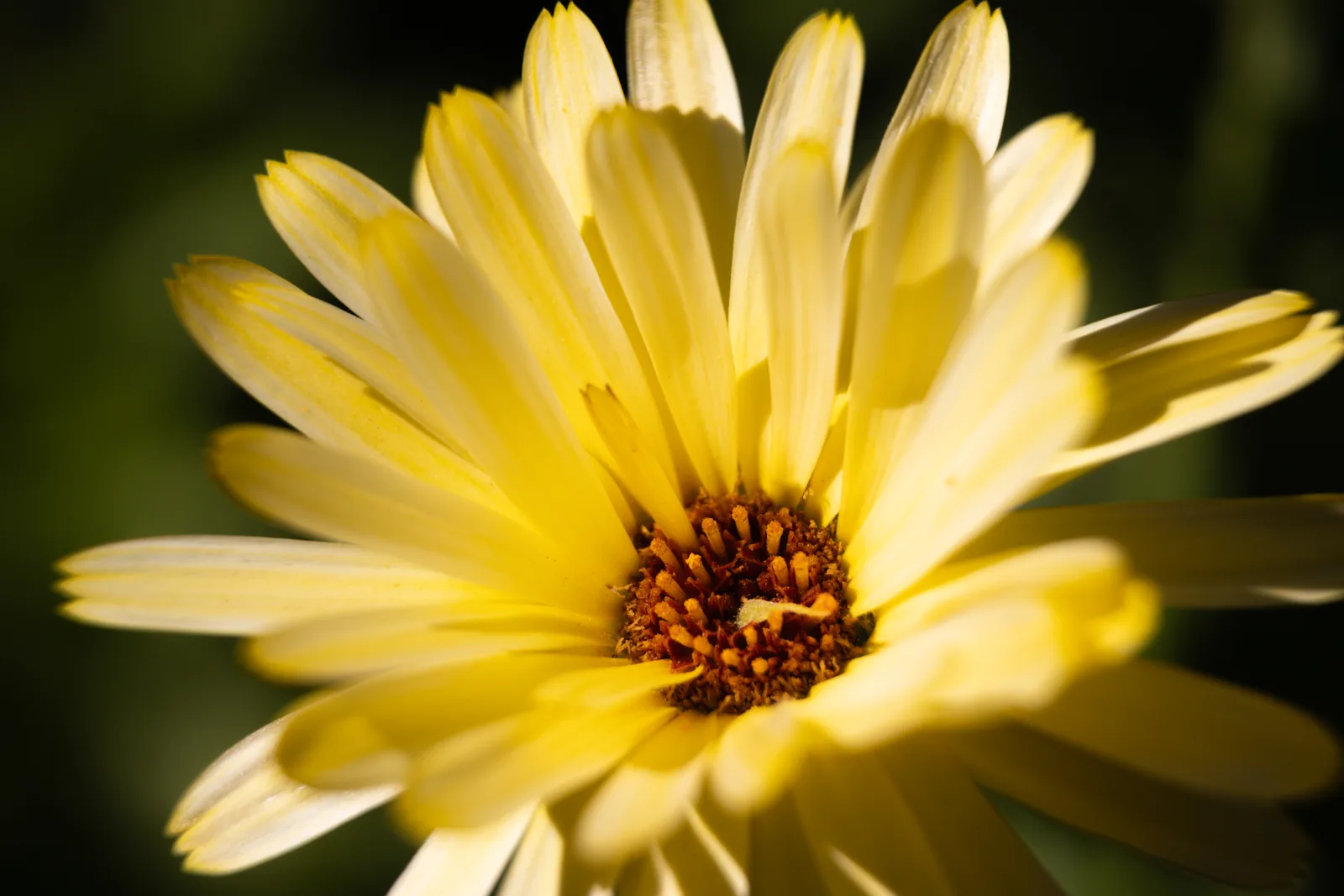
Some photographs document what’s there. Others create a feeling about what’s there. This image falls into the second category—it’s not just showing you a flower, it’s inviting you into a specific mood, a particular emotional register that we might call “cinematic.”
But what does that mean, exactly? And how do you take something as simple as a flower and give it the dramatic weight of a scene from a film?
The Cinematic Quality
When we say an image is “cinematic,” we usually mean it has qualities we associate with motion pictures:
Controlled lighting that creates mood and dimension rather than just illumination.
Intentional composition that guides the eye through the frame with purpose.
Tonal range from deep shadows to bright highlights that creates visual depth and emotional weight.
Narrative suggestion that makes you feel like you’re looking at a moment within a larger story.
This flower image has all of these. It’s lit like a scene, composed like a shot, and carries emotional weight beyond its simple subject matter.
The Magic Hour
This photograph was captured in the last hour of usable light, what photographers call the “golden hour” (though it’s really more like 45 minutes). The sun was low, barely above the horizon, casting warm directional light that’s fundamentally different from midday illumination.
That low angle created the dramatic side-lighting you see here. The flower isn’t evenly illuminated—parts are brilliantly lit while others fall into shadow. This is what creates the three-dimensional quality, the sense of depth and presence that flat, even lighting can never achieve.
The Technical Execution
At f/5.6, I created a narrow depth of field that renders the main flower sharp while transforming the background blooms into soft, glowing orbs of color. This selective focus is crucial to the cinematic quality—like a shallow depth of field in film that directs attention to the subject while maintaining contextual atmosphere.
The 103mm focal length provided the magnification to make this flower fill the frame while keeping me at a distance that wouldn’t disturb the natural light falling across the petals. This slight telephoto compression also helped by visually compressing the background elements, creating that layered quality you see in the out-of-focus areas.
ISO 100 was essential for capturing the full tonal range from the darkest shadows to the brightest highlights without introducing noise that would muddy the subtle color gradations.
The 1/250s shutter speed was fast enough to freeze any movement in the breeze while remaining slow enough that I didn’t need to compromise on aperture or ISO. At this shutter speed, I could still handhold the shot while maintaining optimal image quality settings.
The Color Palette of Emotion
Look at the colors in this image: warm peachy-pinks in the subject flower, deeper oranges in the background, all surrounded by dark, moody tones. This isn’t the bright, cheerful color palette of typical flower photography. This is the palette of autumn evenings, of dimming light, of beauty tinged with the awareness that it won’t last.
Those darker tones aren’t just aesthetically interesting—they create emotional context. The flower emerges from darkness into light, a visual metaphor that our brains interpret automatically as dramatic, important, significant.
The Compositional Strategy
Notice where the main flower sits in the frame: not centered, but positioned according to the rule of thirds, roughly one-third from the left edge. This off-center placement creates visual tension—a sense that the flower is emerging into view rather than just existing statically in the middle of the frame.
The background elements aren’t random chaos. If you look closely, you’ll see they’re arranged in layers at different focal planes, creating depth that draws your eye through the image. The soft glowing circles of out-of-focus flowers (bokeh) act like visual breadcrumbs, leading your eye on a journey through the frame.
Why Bokeh Matters
Those soft, glowing circles in the background aren’t mistakes or happy accidents—they’re the result of specific technical choices. When you shoot wide open (or close to it) with a telephoto lens, out-of-focus points of light render as soft circles. The quality of these circles (smooth vs. harsh, circular vs. polygonal) depends on your lens design.
Good bokeh serves multiple purposes:
It separates subject from background without making the background disappear entirely. You maintain context while ensuring attention stays where you want it.
It creates depth perception by showing multiple focal planes. Your brain interprets this as three-dimensional space.
It adds visual interest without adding distraction. The soft shapes and colors create atmosphere without competing with the main subject.
It enhances the emotional tone of the image. Soft, glowing backgrounds feel dreamier, more romantic, more meditative than sharp, busy backgrounds.
The Lesson in Lighting Direction
Compare this to your average flower photograph taken in flat, even light: same subject, completely different emotional impact. The directional light here creates:
Highlights on the petal edges that define form and create that luminous quality.
Shadows within the flower’s interior that add mystery and dimension.
Gradual transitions from light to dark that guide your eye through the flower’s structure.
Dramatic contrast that makes the flower feel important, worth your sustained attention.
This is why the “golden hour” is golden—not just because the light is warm, but because it comes from a low angle that creates the modeling, dimension, and drama that’s impossible to achieve with overhead midday sun.
The Film Reference
If you’ve seen movies by cinematographers like Roger Deakins or Emmanuel Lubezki, you’ll recognize this lighting approach: selective, directional, with controlled areas of shadow that aren’t just darkness but expressive darkness.
In cinema, lighting isn’t just about visibility—it’s about emotion, atmosphere, narrative. The same principles apply to still photography. You’re not just making the flower visible; you’re creating a feeling about it.
The Developer’s Perspective
As someone who works in software, I’m constantly thinking about signal-to-noise ratio—how to make important information stand out from the background. This photograph is a masterclass in that concept:
Strong signal: The lit flower petals, sharp and commanding attention.
Reduced noise: The soft, dark background that provides context without competition.
Clear hierarchy: Your eye knows immediately where to look, then discovers secondary elements at its own pace.
In UI design, we try to achieve the same effect: make primary actions obvious, provide context without clutter, guide the user’s attention through hierarchy and contrast. Nature and light did it first.
For Aspiring Photographers
If you want to create dramatic, cinematic flower images:
Shoot during golden hour. That last hour of light before sunset provides the directional, warm illumination that creates mood. Set alarms if you must—this light doesn’t wait.
Position yourself relative to the light. Side-lighting creates dimension. Backlighting creates glow and separation. Front-lighting is safe but often flat. Choose based on the emotion you want.
Use shallow depth of field intentionally. Not just because bokeh looks pretty, but because it controls attention and creates visual depth.
Expose for the highlights. Better to let shadows go dark than blow out highlights. Dark shadows are moody; blown highlights are just lost information.
Consider the background. Out-of-focus doesn’t mean invisible. Position yourself so background elements enhance rather than distract.
Wait for the right moment. Cloud passing over? Wait. Harsh light? Come back later. Wind shaking the flower? Patience. Cinematic images require cinematic conditions.
What Makes This Work
Beyond technique, this image succeeds because it makes you feel something. The warm glow, the dramatic shadows, the soft background—these elements combine to create an emotional response that transcends “here’s a pretty flower.”
Maybe it’s wistfulness for summer’s end. Maybe it’s appreciation for beauty that glows brightest as it fades. Maybe it’s just the universal human response to something illuminated against darkness, standing out from shadow into light.
Whatever it is, it’s the difference between documentation and art, between recording and creating, between showing and saying.
The Bigger Lesson
This photograph taught me that “cinematic” isn’t about complexity or expensive equipment or exotic locations. It’s about understanding light, making intentional technical choices, and being present at the right moment with the right tools.
The flower didn’t change. The garden didn’t transform. What changed was the light, and my awareness of how that light could be used to create drama, mood, atmosphere—to transform a simple subject into a scene with emotional weight.
That’s available to anyone willing to chase the right light and wait for the right moment.
The Metaphor We Can’t Ignore
There’s something poetic about flowers that glow brightest in their final days, illuminated by light that’s itself fading. It’s a reminder that beauty and impermanence aren’t opposing forces—they’re partners in creating moments worth preserving.
This flower bloomed in autumn, was photographed in golden hour, and has since faded. But this moment, when light and subject aligned to create something more than either alone—that remains.
Related Reading
If you’re interested in mastering light and creating dramatic images, explore:
- The Story Behind ‘The Unreal Bird’ - More golden hour photography and discovering extraordinary subjects
- Celebrating the Common: Marigolds - Macro technique fundamentals and working with depth of field
- When Nature Becomes Architecture - Compositional strategies for flower photography
Prints Available
This photograph brings dramatic atmosphere and cinematic quality to any space. The warm tones and moody lighting create an emotional presence that works beautifully in spaces dedicated to contemplation, creativity, or simply appreciating the intersection of light and life.
View in Gallery | Order a Print
A Final Technical Note
If you check the EXIF data, you’ll see this was shot handheld at 1/250s. No tripod, no stabilization beyond the lens’s built-in IS and steady hands. Cinematic images don’t require cinema cameras or film crew resources—they require understanding light, making smart technical choices, and being ready when the moment arrives.
The best camera for cinematic photography is the one you have with you during golden hour. The best technique is the one that lets you capture the moment before the light changes.
Everything else is details.
What “cinematic” moments have you captured with your camera? I’m always curious about how others chase and capture dramatic light. Share your golden hour stories below—we can learn from each other’s illuminated moments.