Patience and The Busy Bee: Lessons in Wildlife Photography
What a single bee taught me about patience, observation, and the art of being present—and how that translated into one of my favorite photographs.
A Study in Dedication
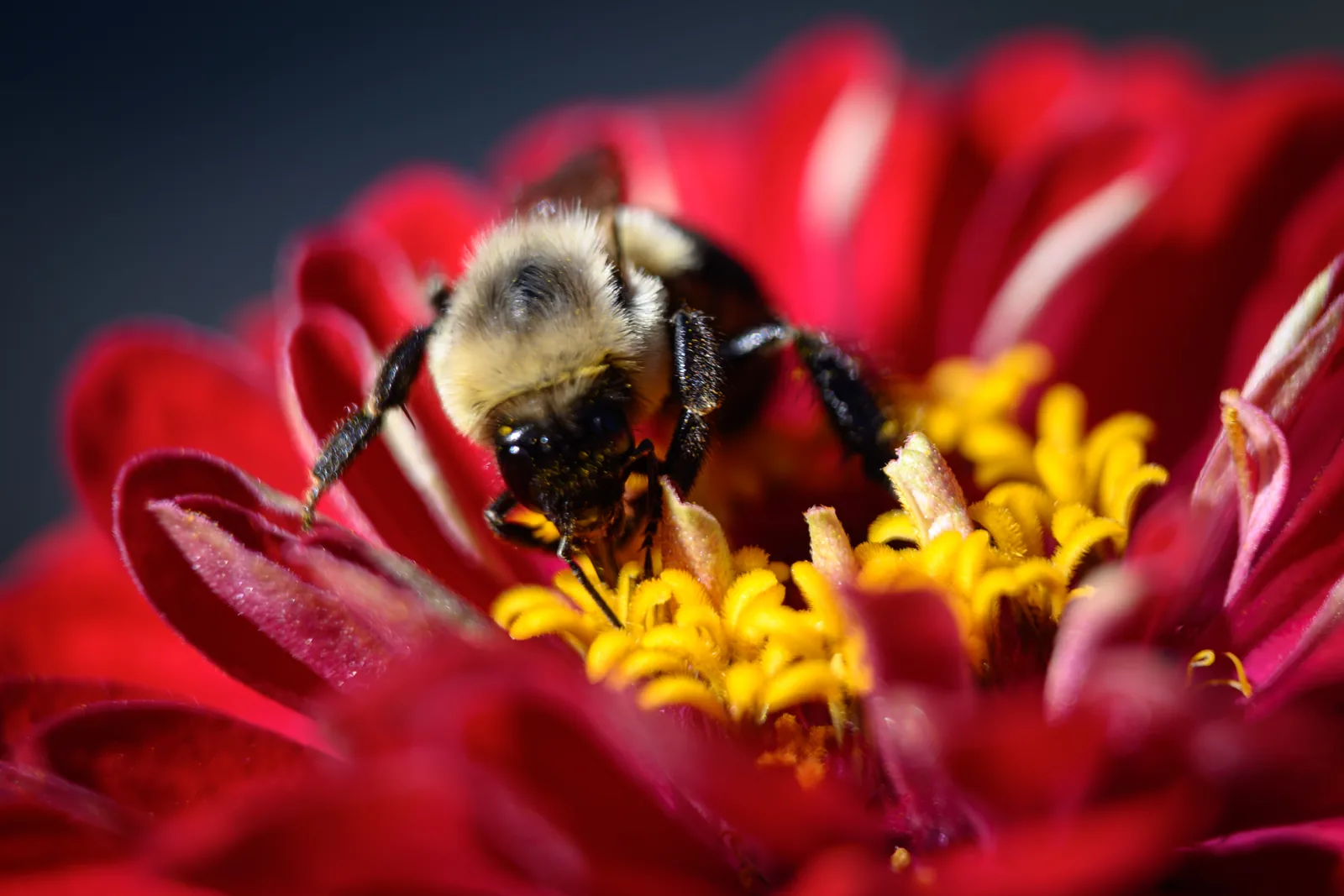
There’s something mesmerizing about watching a bee at work. Not the casual observation from a distance, but really watching—close enough to see the pollen dust its legs, to notice the methodical way it moves from bloom to bloom, to witness the ancient dance between pollinator and flower that has sustained life for millions of years.
This particular bee was all business. No wasted movement, no hesitation. Just pure, focused industry among the autumn wildflowers.
The Challenge I Didn’t Expect
When I started this photography challenge, I thought the hardest part would be mastering camera settings or understanding composition rules. And yes, those things are challenging. But what I didn’t expect was how much wildlife photography would teach me about myself—specifically, about my impatience.
As a developer, I’m used to immediate feedback loops. Write code, run it, see results. Iterate quickly. Move fast. Break things (hopefully in controlled ways).
Photography a bee? That’s a different game entirely.
Learning the Pattern
Bees don’t pose. They don’t wait for perfect light or ideal composition. They work, and they work fast. My first instinct was to just start shooting and hope I got lucky. I burned through probably 30 shots in the first two minutes, and none of them were worth keeping.
So I stopped. Put the camera down. And just watched.
After a few minutes, I noticed something: the bee had a pattern. It would:
- Circle a flower cluster
- Test 2-3 blooms
- Settle on the most promising one
- Work that flower for 3-5 seconds
- Move to the next cluster
Once I understood the pattern, I could anticipate where it would land next. I could pre-focus on a particular bloom and wait for the bee to come to me, rather than chasing it around the garden.
The Technical Dance
With the pattern understood, I could focus on the technical execution. I positioned myself downwind so my shadow wouldn’t startle it, then set up my shot:
120mm focal length with extension tubes: This gave me the magnification I needed to capture intricate detail while maintaining enough working distance to not disturb my subject.
f/4.5: Just enough depth of field to render the bee sharp from head to wings, while transforming the background flowers into a watercolor of warm autumn hues.
1/320s: Fast enough to freeze those rapidly beating wings mid-motion. Too slow and you get motion blur; too fast and you start compromising on other settings.
ISO 100: Maximum color saturation and zero noise. Possible because of the soft, even overcast light.
What This Image Reveals
If you look closely at this photograph, you’ll see more than just a bee on a flower. You’ll see:
- The pollen basket on its hind legs, already dusted with the day’s harvest
- The compound eyes reflecting the overcast sky
- The translucent wings catching soft light at just the right angle
- The delicate flower petals bending under its weight
- The background bokeh of countless other flowers waiting their turn
Each element tells part of the larger story—the interconnected ecosystem of a single autumn morning.
The Lesson in Patience
This shot taught me that wildlife photography isn’t about forcing moments—it’s about understanding behavior and being ready when nature presents its gift. The bee didn’t care about my camera, my composition, or my artistic vision. It cared about nectar and pollen.
My job wasn’t to direct the scene but to witness it, to be present and prepared when everything aligned: the bee, the flower, the light, and my camera settings.
This is a lesson I’m trying to carry back into other areas of my life. Sometimes the best approach isn’t to force things or move faster—it’s to understand patterns, be patient, and be ready when the moment arrives.
Why This Moment Matters
In our world of constant motion and distraction, there’s something grounding about documenting a creature doing exactly what it was meant to do. No drama, no performance—just honest work. The bee doesn’t know it’s being photographed. It doesn’t care that humans think it’s beautiful or important. It simply is, fulfilling its role in the great cycle.
And somehow, in capturing that authenticity, the photograph becomes more than just a pretty picture. It becomes a reminder that purpose doesn’t need to be complicated or self-aware. Sometimes it’s as simple and profound as a bee among flowers on an autumn morning.
The Developer’s Perspective
As someone who codes for a living, I see interesting parallels between debugging and wildlife photography:
Debugging: Observe the behavior, identify patterns, form hypotheses, test systematically, iterate.
Wildlife Photography: Observe the behavior, identify patterns, anticipate moments, position carefully, capture.
Both require patience. Both require observation before action. Both reward systematic thinking over random attempts.
Maybe the bee taught me more about programming than just photography.
Try It Yourself
If you want to practice wildlife photography with small subjects like bees, here’s what I’d recommend:
- Start by watching, not shooting. Spend 5-10 minutes just observing behavior.
- Look for patterns. Most creatures have routines you can predict.
- Position yourself thoughtfully. Consider your shadow, your angle, your background.
- Pre-focus when possible. Let the subject come to you rather than chasing it.
- Use continuous shooting mode. When the moment happens, capture the sequence.
- Be patient with yourself. This is a skill that develops over time.
Related Reading
If this exploration of patience and observation resonated with you, check out:
- The Story Behind ‘The Unreal Bird’ - Another wildlife encounter that required being present at the right moment
- The Accidental Still Life - Learning to recognize photographic moments through “soft awareness”
- Celebrating the Common: Marigolds - More lessons on macro photography technique and getting close to your subject
Prints Available
This photograph captures a moment of pure natural dedication that resonates with people across different backgrounds—whether you’re drawn to the technical challenge, the artistic composition, or simply the beauty of nature at work.
View in Gallery | Order a Print
Final Thought
The busy bee taught me that the best photographs aren’t seized—they’re earned. Through patience, observation, and respect for your subject. Through understanding that you’re not the star of this show; you’re just the witness trying to document something that matters.
And maybe that’s true for more than just photography. As I’ve explored in my reflections on tech and creativity, the lessons from photography often apply surprisingly well to software development and other creative pursuits.
What has wildlife photography taught you? I’m still learning, and I’d love to hear from more experienced photographers about their own lessons from nature. Share your stories below.